 PennyPerHour
How much does a fan cost to run?
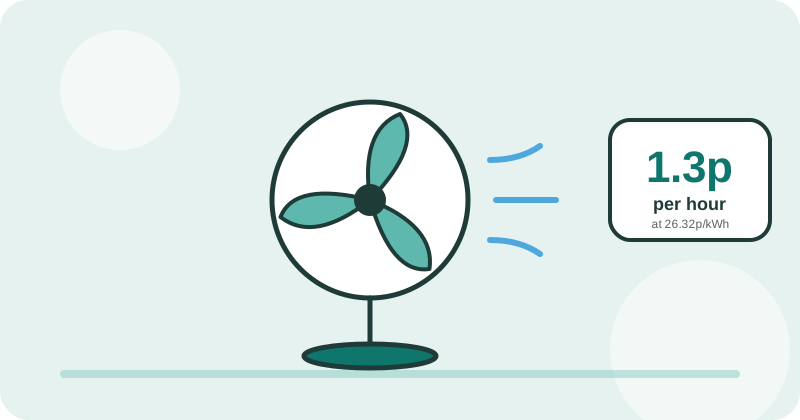
A typical pedestal or tower fan uses 40–60 watts. At 26.32p/kWh, a 50W fan costs about 1.3p an hour, or 11p for a full night. That's a fraction of the cost of portable air conditioning.
Electricity 26.32p/kWh, gas 7.97p/kWh (Ofgem cap, 1 October to 31 December 2026). Typical figures.
Fan running costs by type
| Appliance | 1 hour | 8 hours | Per month (8h/day) |
|---|---|---|---|
| DC motor fan, low (10W) | 0.3p | 2.1p | 63p |
| Desk fan (30W) | 0.8p | 6.3p | £1.90 |
| Tower fan (45W) | 1.2p | 9.5p | £2.84 |
| Pedestal fan (55W) | 1.4p | 12p | £3.47 |
| Ceiling fan, high (70W) | 1.8p | 15p | £4.42 |
| Evaporative air cooler (80W) | 2.1p | 17p | £5.05 |
Based on 26.32p/kWh, the Ofgem price cap for 1 October to 31 December 2026.
Fans on lower speed settings use much less than their maximum. DC motor fans are especially efficient on low settings, which is how most people run a fan overnight.
Fan vs air conditioning
Fans don't cool the air; they make you feel cooler by moving air across your skin. Air conditioners actually lower the room temperature, but use far more power:
- Pedestal fan (55W), 8 hours: 12p
- Portable air conditioner (1,000W), 8 hours: £2.11
So a portable air conditioner costs roughly 18 times as much to run as a fan. For most UK homes, where hot spells are short, a good fan is the cheapest way to sleep through a heatwave.
How to get more from your fan
- Close curtains and blinds during the day to stop the room heating up in the first place.
- Create a through-draught in the evening: fan near a window blowing out, another window open on the other side of the house.
- Use the timer so it switches off once you're asleep.
- Clean the blades and grille. Dust reduces airflow.
- Reverse ceiling fans in winter (if yours can) to push warm air down from the ceiling.
What to look for
- DC motor: quieter and more efficient, with more speed settings.
- Noise level in decibels if it's for a bedroom; look for a sleep or night mode.
- Oscillation (side to side, and ideally up and down) to cover the whole room.
- Remote control and timer.
- Cordless/rechargeable models are handy for gardens and moving between rooms.
Work out the cost for your fan
Change the wattage or hours to match yours.
Default price is the Ofgem cap for 1 October to 31 December 2026. Check your bill for your exact unit rate. Figures exclude standing charges.
What to buy: our picks by need
We recommend types of product based on running costs and features, not specific brands we have tested.
A DC motor fan with a night mode, timer and very low lowest speed for quiet, cheap overnight running.
See options on Amazon →A pedestal fan that oscillates both side to side and up and down.
See options on Amazon →A cordless rechargeable fan that you can carry outside or between rooms.
See options on Amazon →Shopping for one? Compare current models, prices and wattages before you buy.
Browse fans on Amazon →Affiliate link: we may earn a small commission at no extra cost to you.
Thanks for letting us know.
Frequently asked questions
How much does it cost to run a fan all night?
About 11p for a typical 50W fan running for 8 hours at 26.32p/kWh, and less on a low setting.
Are tower fans cheaper to run than pedestal fans?
They use similar power, usually 40 to 60W. The bigger difference is between AC and DC motors: DC fans use less on low settings.
Is it cheaper to run a fan or air conditioning?
A fan, by far. A portable air conditioner can use around 1,000W, roughly 18 times as much as a pedestal fan.